Behavioural Scientist | AI Safety Expert | Consultant | International Speaker
I help organizations understand human behaviour, evaluate AI in real-world contexts, and create safer digital environments.
Responsible AI • AI Validation • Gaming • Online Safety • Cybersecurity & Defence • Wellbeing
Consulting • Workshops • Speaking
Behavioural science expertise for organizations working with AI, digital platforms, online safety, human behaviour and wellbeing.
Interactive, research-informed workshops that turn behavioural science into practical strategies for teams, leaders and organizations.
Engaging talks on responsible AI, AI evaluation, online safety, gaming, digital wellbeing and human behaviour.
Available for corporate, technology, public-sector, education and conference engagements.
Behavioural science applied to the challenges shaping AI, digital safety and human performance.
Helping organizations understand the human and behavioural dimensions of responsible AI, including trust, human oversight, behavioural risk and real-world impact.
Human-grounded evaluation of how AI interprets behaviour, makes judgments and performs in realistic human contexts.
Understanding behavioural patterns, escalation, toxicity and digital conflict to help create safer online environments before harm escalates.
Applying behavioural science to human factors, behavioural risk, resilience, decision-making under pressure and human–AI interaction in cyber and defence environments.
Understanding player behaviour, toxicity, community health, online interaction and the behavioural conditions that support healthier digital communities.
Applying behavioural science to stress, emotional regulation, resilience, communication, decision-making and performance under pressure.
I am a behavioural scientist, psychologist, researcher and international speaker with more than two decades of academic and professional experience studying how people think, communicate, make decisions and change behaviour.
My career has spanned academia, psychological practice, research and entrepreneurship, including roles as an assistant professor, researcher and practicing psychologist. Across more than two decades of psychological practice, research and work in education, I have supported thousands of young people and families, giving me a deep understanding of human behaviour in real-world environments.
Today, I apply behavioural science to some of the most important challenges emerging at the intersection of people and technology — responsible AI, AI validation, online safety, cybersecurity and defence, gaming, digital communities and wellbeing. My work focuses particularly on how AI interprets human behaviour, how people respond to intelligent systems, and how behavioural evidence can help make technology safer and more trustworthy.
I founded Felixa Health to translate this work into practical approaches for understanding behaviour and creating safer online environments. Alongside my research, I advise organizations, lead workshops and speak internationally on the human side of AI, digital safety and behaviour change.
Dr. Ewa Antczak brings more than two decades of behavioural science, psychology and research to some of today's most urgent questions about AI, trust and digital safety. Her talks make complex ideas understandable, provocative and practical — helping audiences think differently about how technology affects people and how we can make it safer.
AI increasingly interprets emotions, intentions and behaviour. But how do we know when its judgments are right? A thought-provoking exploration of what AI understands about people — and what it still gets wrong.
AI can perform well on technical benchmarks and still fail in the complexity of real human situations. This keynote explores why human-grounded validation may be one of the missing layers in responsible AI.
What if we could identify behavioural escalation before an online interaction becomes harmful? Dr. Ewa explores how behavioural science and AI can help move digital safety from reacting to harm toward preventing it.
Technology may detect threats, but people still interpret information, communicate, make decisions and act under pressure. This talk examines behavioural risk, resilience, human–AI interaction and decision-making in high-stakes environments.
Why do people trust some technologies and reject others? Drawing on behavioural science, this keynote explores trust, uncertainty, human oversight and what organizations need to understand as AI becomes part of everyday decisions.
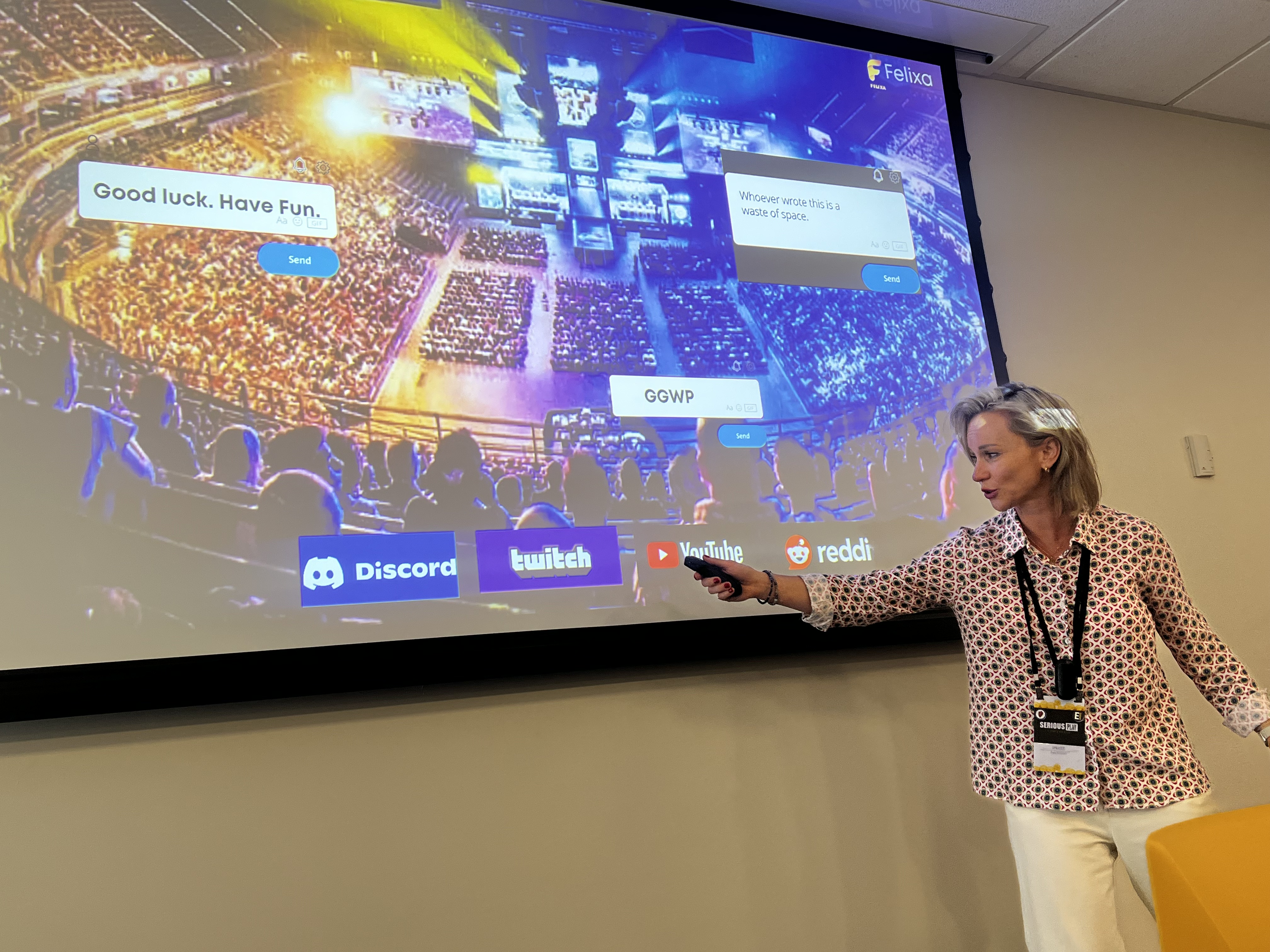
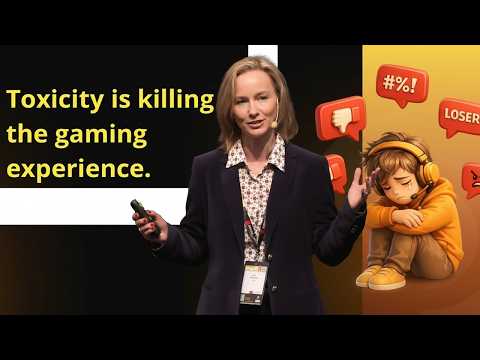
| May 26, 2026 | Malmö, Sweden | Nordic Game 2026, AI Track "Psychology and Technology Behind Safer Online Spaces" |
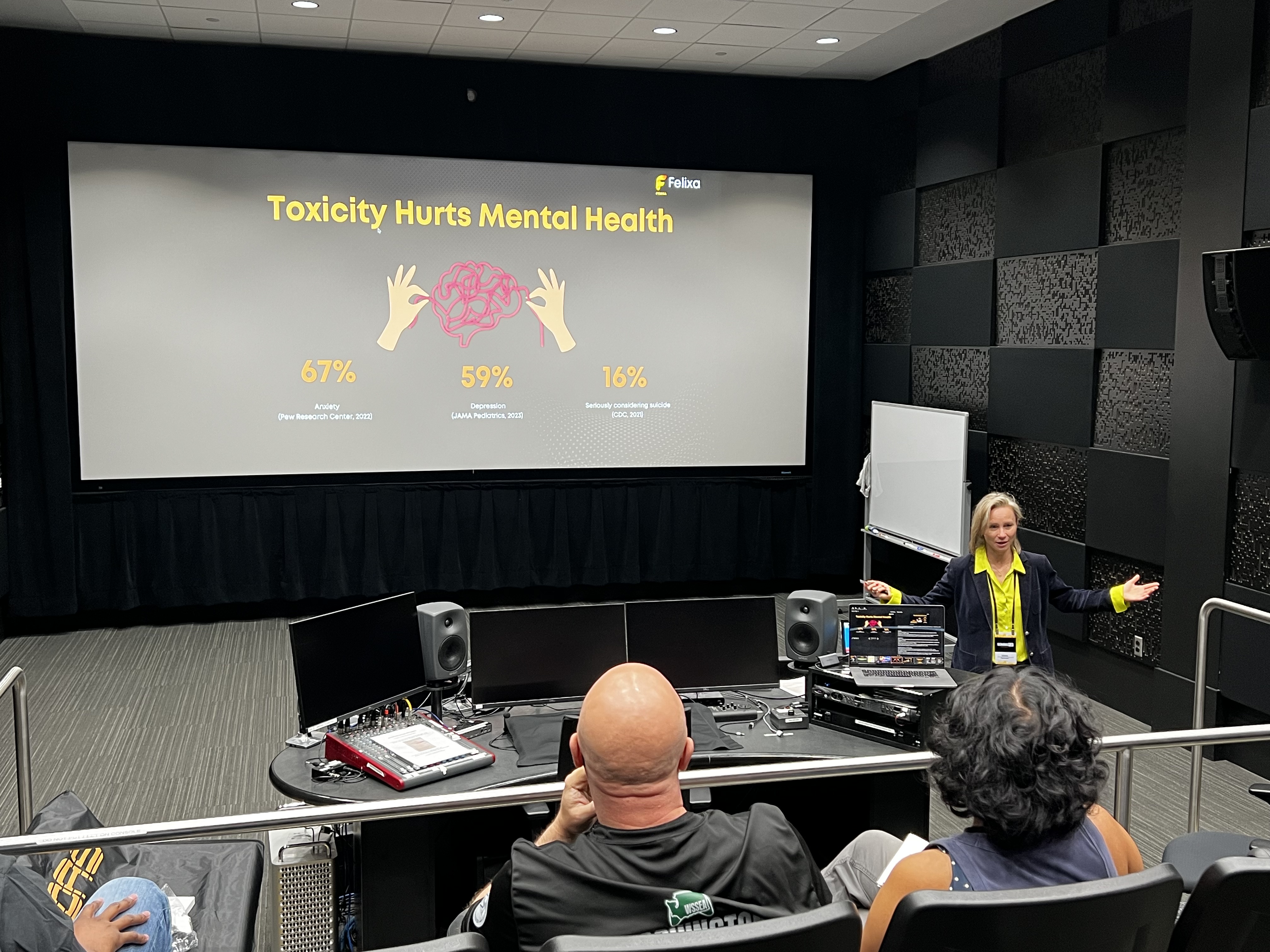
| Aug 16, 2025 | Rochester, New York, USA | Serious Play Esports Summit, RIT MAGIC Spell Studios "Using AI and Positive Psychology to Transform Harmful Behaviours in Online Gaming Communities" |
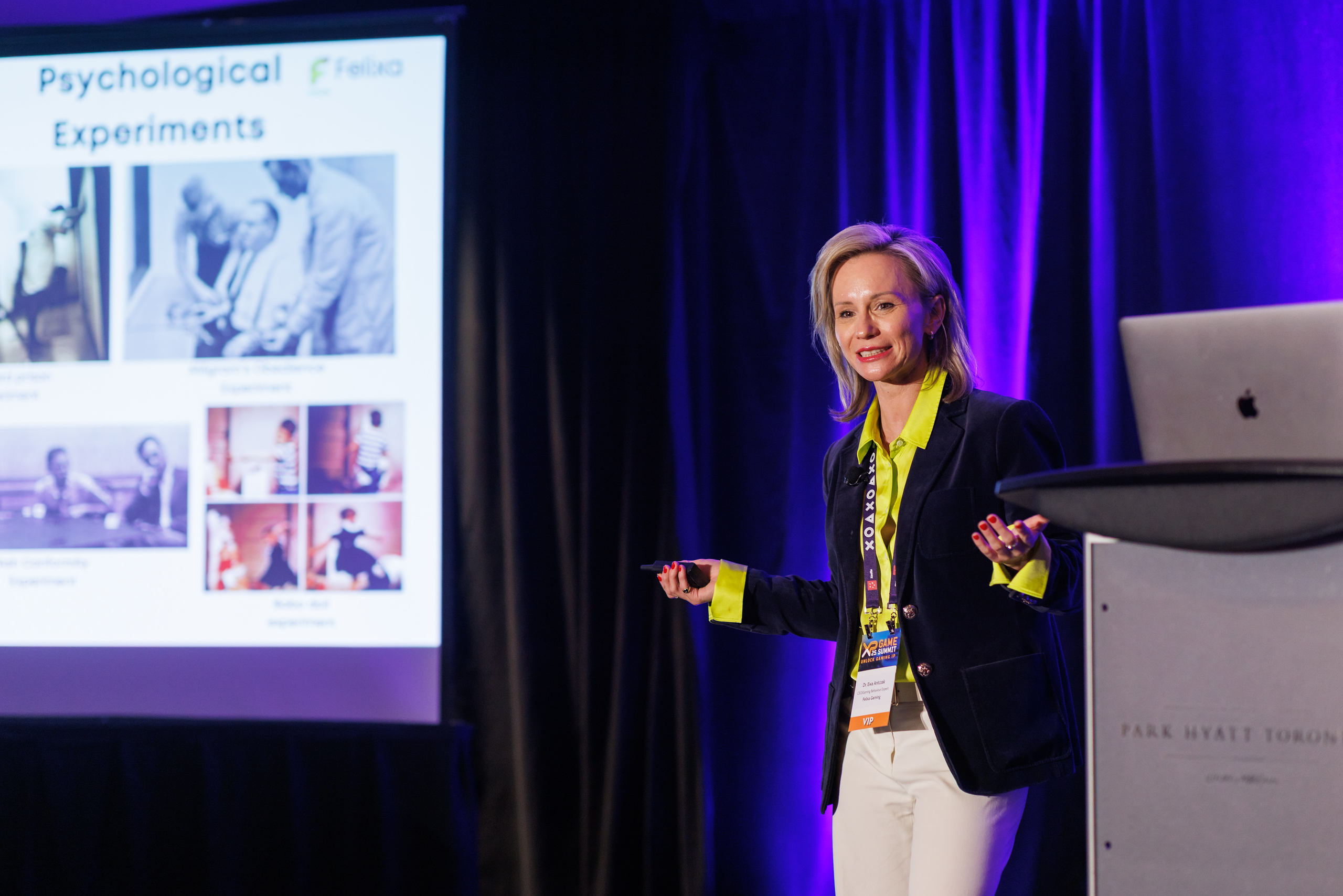
| Jun 13, 2025 | Toronto, Canada | XP Game Summit 2025 "Creating Safer Online Spaces for Youth" |
| May 21–23, 2025 | Grimstad, Norway | The Academic Esports Seminar at UiA Grimstad, University of Agder |
| Aug 7, 2026 | Toronto, Ontario, Canada | Leading Under Pressure Nexelle Program, The Firehood. Workshop on how thoughts, emotions, mindset, and behavioural responses influence performance under pressure. Cofacilitated by Dr. Ewa Antczak and Mikolaj Antczak. |
| Aug 29, 2026 (Upcoming) | Oakville, Ontario, Canada | Parenting Under Pressure Half-day experiential workshop combining behavioral science, emotional regulation, mindfulness, creative activities, nature, and practical parenting strategies. Facilitators: Dr. Ewa Antczak and Ryan Joseph. |
| Apr 6, 2026 | Mississauga, Ontario, Canada | Empower The Whole You Canada Poland Association of Businesswomen. Dr. Ewa Antczak participated as an expert speaker. |
| Aug 15, 2025 | Rochester, USA | Serious Play Conference at the University of Rochester "The Psychology and Technology Behind Safer Gaming" |
| Feb 14, 2020 | Toronto, Canada | TCDSB Leaders of Your Own Learning (LOYOL) "Mental Health in the Classroom" |
| May 22, 2019 | Toronto, Canada | Empowering Women and Wellness in the Workplace – Collision Conference |
| Mar 26, 2019 | Mississauga, Canada | All You Need to Know About Psycho-Educational Assessments Learning Disabilities Peel Region (LDPR) |
| Aug 20, 2019 | Mississauga, Canada | Ways to Motivate and Engage Students with a Learning Disability LD@school's 6th Annual Educators' Institute |
| Aug 22, 2018 | Toronto, Canada | IDEAL ME: Confident, Assertive, In Charge – Developing the Attitudes of Leadership LD@school's 5th Annual Educators' Institute |
| Jun 21, 2018 | Dnipropetrovsk, Ukraine (videoconference) | Management and Leadership in the Multicultural Society Guest Speaker, National Mining University |
| Nov 10, 2016 | Mississauga, Canada | Preserving Our Working Memory Rotary Club Presentation |
| Nov 3, 2016 | Mississauga, Canada | Working Memory Rotary Club Presentation |
| Jan 2015 | Montreal, Canada | Enhancing Child's Interest in Learning Polish Teachers Federation |
| Sep 2014 | Burlington, Canada | Enhancing Child's Interest in Learning Polish Teachers Federation |
| Jun 2014 | Mississauga, Canada | Changing Negative Attitudes in Children and Youths |
| Oct 2006 | San Diego, USA | Social Intelligence Test-R as a Neuropsychological Instrument Poster, National Academy of Neuropsychology Conference |
| Jun 2005 | Würzburg, Germany | Why Stories Make Us More Helpful 14th General Meeting |
| Jun 2004 | Mądralin, Poland | Personal History and Stereotype as Two Contexts of Person Cognition Conference on Psychological Context in Intergroup Relations (Dr. M. Kofta) |
| Sep 2003 | Padova, Italy | Narrative Mode Influence on Person Impression ESCON Conference |
| Sep 2003 | St. Kathrin, Poland | Narrative Mode Influence on Person Impression III Polish Conference of Narrative Psychology (Dr. P. Oleś) |
| Feb 2003 | Warsaw, Poland | Workshops on Social Advertising |
| Jun 2001 | Warsaw, Poland | The Effectiveness of Fear Appeal Public Service Announcements Warsaw Workshop on Social Psychology |
| May 2001 | Kraków, Poland | The Effectiveness of Fear Appeal Public Service Announcements Crackfilm Festival |
| Jan 2001 | Wrocław, Poland | Changing Attitudes: "New Millennium – I Do Not Smoke Because I Like It." Social Marketing as a Weapon Against Smoking |
| Jun 2000 | Wrocław, Poland | Social Advertising in Poland International Conference: The Role of Media in the Process of Communication |
| 2000 | Warsaw, Poland | Role of Persuasive Psychology in Commercial Advertising (Supervisor: Dr. A. Grochowska) |
| 1999 | Warsaw, Poland | Narcissistic Disorders of Personality (Supervisor: Dr. E. Trzebińska) |
| 1998 | Warsaw, Poland | A Not-B Effect (Supervisor: Dr. K. Konarzewski) |
| 1998 | Warsaw, Poland | Sport Fans and Violent Behaviours (Supervisor: Dr. A. Frączek) |
Keynotes • Workshops • Panels • Corporate Training • Virtual Presentations
Get in Touch Email Directly25+ years of pioneering research at the intersection of behavioral science, psychology, and technology. From narrative psychology to AI-driven behavioral transformation, each project contributes to creating safer, more empathetic digital communities.
| 2026 |
The Psychology and Technology Behind Safer Online Communities
(5th Annual Let's Talk About Youth: A Clinical Developmental Psychology Conference, York University, Toronto, Canada — April 27, 2026)
|
Research developed with students from the University of Toronto and the University of Guelph. Presented on behalf of the research team by Mikolaj Antczak and Bella Stasiuk. |
| 2026 |
(Research Poster – 29th Annual CyberPsychology, CyberTherapy and Social Networking Conference, CYPSY29, Porto, Portugal)
|
Examined agreement between artificial intelligence and trained human judgments when evaluating emotional tone in online communication. Authors: Ewa Antczak, Joseph Macey, Mikolaj Antczak, and Yaqi Huang. Poster presented by Dr. Ewa Antczak. |
| Under Peer Review | Collaborative research with Dr. Ewa Antczak, Joseph Macey, Anna Leena Macey, and Juho Hamari examining proactive approaches to online toxicity and opportunities for behavioural intervention before harmful interactions escalate. | |
| 2025 |
AI–Human Alignment in Evaluating Online Behavior
(Second Place Poster Finalist – Ontario Psychological Association 78th Annual Conference, 2025)
|
Empirical validation comparing AI-generated and human ratings of emotional and behavioral attributes across multiple platforms. |
| 2025 |
Transforming Digital Human Interaction: The Felixa Psychological Foundations
|
Conceptual manifesto defining the psychological, philosophical, and behavioral framework behind Felixa; bridges psychology, ethics, and AI. |
| 2025 | Published study integrating psychology and AI for safer gaming environments; presented at Serious Play & XP Game Summit. | |
| 2024 |
Behavioral and Semantic Markers as Predictive Tools
|
Development of AI-driven linguistic and behavioral indicators that predict and transform toxic interaction patterns in gaming and streaming ecosystems. |
| 2023 |
Internet and Digital Media Usage and Its Impact on Mental Well-Being
|
Examined behavioral, emotional, and motivational effects of prolonged digital exposure; foundation for Felixa's digital-behavior framework. |
| 2021 – Present |
Felixa Health – AI for Safer Digital Communities
|
Behavioral analytics platform merging psychology and AI to detect, interpret, and transform toxic online behaviors. |
| 2018 – 2021 |
Talk2Alex
|
AI-supported emotional-coaching and self-regulation app; precursor to Felixa's behavioral feedback loop. |
| 2010 – 2020 |
IdealMe Program
|
Psychoeducational framework integrating emotional regulation, motivation, and cognitive restructuring for children and youth. |
| 2004 – 2006 |
Social Intelligence: Test-R as a Neuropsychological Instrument
(Celinski & Associates)
|
Validated instrument assessing social cognition, emotional insight, and interpersonal problem-solving. |
| 2004 – 2006 |
Stress Lessons – Psychology Foundation of Canada
|
Supported creation and evaluation of a curriculum teaching emotional regulation and coping strategies to educators and students. |
| 2001 – 2005 |
Narrative Mode Influences Mindset in Understanding Others
(SWPS University)
|
Demonstrated that narrative-based processing enhances empathy and reduces stereotyping in person perception. |
| 2001 – 2005 |
Narrative Mode in Person Cognition
(SWPS University)
|
Explored how narrative framing shapes perception of others' intentions and moral judgments. |
| 2001 – 2005 |
Narrations in Schizophrenia
(SWPS University)
|
Analyzed differences in narrative coherence between psychotic and non-psychotic thought processes. |
| 2001 – 2002 |
Influencing Conscious and Unconscious Attitudes and Physiological Arousal Toward Smoking Through Public Service Announcements
(Maison & Antczak, University of Warsaw)
|
Measured heart rate, skin conductance, and attitude change in response to emotional PSA campaigns—early research in persuasive health communication. |
Let's explore opportunities to advance behavioral science, AI ethics, and digital well-being together.
Get in Touch Email DirectlyPeer-reviewed publications, books, and scholarly contributions spanning narrative psychology, social advertising, behavioral science, and AI-driven digital safety solutions.
| Antczak, E. J., Antczak, M., & Huang, Y. (2026). Online toxicity as a behavioral system: A framework for detection and behavior change in digital environments. SSRN preprint. Read paper |
| Antczak, E. J. From Moderation to Behavior Change. Under peer review. Read paper |
| Antczak, E. J., Macey, J., Antczak, M., & Huang, Y. (2026). Human AI agreement in online emotional tone assessment: A preliminary calibration study. Accepted full paper for editorial processing and publication in the Annual Review of Cybertherapy and Telemedicine. Read paper |
| Antczak, E. J. (2025). Transforming digital human interaction: The Felixa psychological foundations. Conceptual manuscript in progress. |
| Antczak, E. J. (2025). Human–AI alignment in digital ethics: Toward proactive behavioral intervention systems. Manuscript submitted for publication. |
| Antczak, E. J. (2025). The psychology and technology behind safer gaming communities: How Felixa shapes safe online interactions [PsyArXiv preprint]. PsyArXiv. https://osf.io/preprints/psyarxiv/utypx_v1 |
| Antczak, E. J. (2018). Happiness of other people does not make us happy. Toronto Waterfront Magazine. |
| Antczak, E. J. (2016–2018). Bi-weekly columns. GazetaGazeta (print & online). |
| Antczak, E. J. (2008). Propaganda dobrych serc – vademecum o reklamie społecznej [Propaganda of Good Hearts – Handbook on Social Advertising]. Kraków, Poland: Agencja Wasilewski. |
| Trzebiński, J., & Antczak, E. J. (2007). Narrative mode in impression formation. Psychology of Language and Communication, 11(2), 65–83. https://www.researchgate.net/publication/237699669 |
| Trzebiński, J., & Antczak, E. J. (2006). A story and a stereotype: Two frames for person perception. Psychologia Społeczna, 1(2), 121–131. View publication |
| Celiński, M. J., Salmon, J. D., Allen, L. M., Palucka, A., & Antczak, E. J. (2006). Social Intelligence Test-R as a neuropsychological instrument [Conference abstract]. Archives of Clinical Neuropsychology, 21(6), 544. https://academic.oup.com/acn/article/21/6/544/3185 |
| Antczak, E. J. (2004). Narrative mode influences mindset in understanding others (Doctoral dissertation). University of Social Sciences and Humanities (SWPS University), Warsaw, Poland. |
| Trzebiński, J., & Antczak, E. J. (2003). Personal history and stereotype as two contexts of person cognition. In E. Zdankiewicz-Ścigała & T. Maruszewski (Eds.), Around psychomanipulation (pp. 201–218). Warsaw, Poland: Academica. |
| Antczak, E. J. (2002). Seven chapters. In D. Maison & P. Wasilewski (Eds.), Propaganda dobrych serc, czyli rzecz o reklamie społecznej (pp. 145–190). Kraków, Poland: Agencja Wasilewski. https://www.maisonlab.pl |
| Antczak, E. J. (2001). Fear and alexithymia influence public service announcement perception (Master's thesis). University of Social Sciences and Humanities (SWPS University), Warsaw, Poland. |
Interested in collaborating or learning more about my work in behavioral science and digital ethics?
Get in Touch Email DirectlyDr. Ewa Antczak has contributed to public conversations about psychology, behavioural science, mental health, children and families, digital behaviour, artificial intelligence, gaming, online safety, and human wellbeing through articles, columns, podcasts, interviews, webinars, expert commentary, and public education.
Writing for Felixa on behavioural intelligence, AI, and online safety.
Examines why people speak more harshly in voice chat, tying the effect to reduced accountability and the online disinhibition effect.
Looks at how emotional escalation shapes tone in online interactions before a conversation turns hostile.
Examines how AI can move beyond interpreting isolated words toward understanding behavioural patterns across repeated interactions.
Connects evolutionary biology and behavioural science to conflict, cooperation, and threat responses in digital spaces.
Examines limitations in AI's grasp of complex human emotion and behaviour, and the case for human-grounded evaluation.
Examines early behavioural indicators and how proactive AI intervention can catch harm before it escalates.
Recaps Dr. Antczak's AI Track session at Nordic Game 2026 in Malmö.
Examines how harmful patterns can occur even when the person creating them appears polite or socially positive.
Addresses a common misconception about behavioural AI and clarifies what pattern-based detection actually does.
Explores AI, relationships, children, attachment, and emotional development as young people form bonds with artificial systems.
Explores behavioural detection and real-time intervention as an alternative to purely reactive moderation.
Addresses online bullying, behavioural warning signs, and how parents can open the conversation with kids.
Surveys major applications of artificial intelligence within the gaming industry.
Examines popular games for children, gaming culture, engagement, and monetization.
Examines psychological, social, and cognitive benefits associated with gaming.
The public Felixa article presenting this research for a general audience. The peer-reviewed preprint is listed separately under Publications.
Explores both the benefits and behavioural risks associated with gaming.
Examines the relationship between toxicity, player experience, and community health.
Discusses gaming communities, online safety, and behavioural risks for parents.
Explains the role of behavioural analytics and community health assessment in understanding online environments.
Biweekly columns addressing human behaviour, emotional wellbeing, relationships, parenting, children, families, and mental health.
Examines decision making, learned beliefs, automatic thinking, and personal responsibility in behaviour change.
Polish-language article on the role of grandparents in children's lives and intergenerational family dynamics.
Long-form piece on celebrity culture, social media, external validation, and adolescent self-esteem.
Discusses ADHD, attention, and non-pharmaceutical approaches including neurofeedback. No archived link currently available for this print piece.
Expert interview with Dr. Ewa J. Antczak. Original publication date not currently available from the archived source.
Already listed as a full record in the Publications section above to avoid a duplicate entry.
Full video and details are under Talks and Interviews in the Speaking section above.
Discussion of gaming, mental health, and how Felixa's behavioural technology approaches digital wellbeing.
Recorded session on emotional wellbeing, resilience, coping, and everyday mental health check-ins.
Discussion focused on youth mental health, psychological wellbeing, and community support.
Discussion about children, technology, mental and physical wellbeing, and digital exposure, referencing Talk2Alex.
Interview on the emotional and psychological effects of the COVID-19 pandemic on children and families.
Discussion of anxiety, depression, isolation, and coping strategies during the pandemic.
Introduced Talk2Alex and explored psychological support for children facing anxiety, depression, and self-esteem difficulties. Original publication date not currently available from the archived source.
An eight-part expert Q&A series covering the school year from a behavioural and emotional-wellbeing lens.
Warning signs, parental support strategies, and how to access help for youth mental health concerns.
Guidance on gaming boundaries, family routines, and healthy gaming behaviour for parents.
Ideas for children's engagement and family connection as alternatives to excessive screen time.
Coping strategies for loneliness, social connection, and emotional wellbeing.
Guidance for parents supporting children through anxiety.
Funding resources for gifted youth and their families.
Study strategies and learning performance guidance for students.
Describes how the IdealMe program supports gifted development and personal growth.
Introductory resource explaining the relationship between gaming and psychological wellbeing.
Addresses performance pressure, expectations, and coping in competitive gaming.
Addresses low mood and mental wellbeing in gaming contexts.
Addresses anxiety and stress associated with social media use.
Addresses anger, frustration, and emotional regulation tied to gaming behaviour.
Addresses family conflict, communication, and boundaries around gaming.
Addresses problematic gaming behaviour and family-centred psychological support.
Professional guidance for therapists working with gamers.
Guidance for gamers on engaging effectively in gaming-focused psychological support.
Dr. Antczak's experience with public communication extends beyond interviews and authored articles and includes editorial and journalism roles earlier in her career: Director & Associate Editor, Toronto Waterfront Magazine (2018–2022), and Journalist, Polish Radio & Television (PR III), Warsaw — both listed under Professional Experience above.
From behavioural AI to psychological care, discover the organizations and platforms where this work comes to life.
Felixa Health
Behavioural AI helping organizations build safer, healthier digital spaces.
Felixa Validate
Human-grounded validation for how AI interprets and evaluates behaviour.
Felixa Gaming
Partnering with gaming studios and communities on player safety and wellbeing.
Workshops for leaders and executives grounded in behavioural science.
Core Centre
Psychological services supporting children, youth, and families.